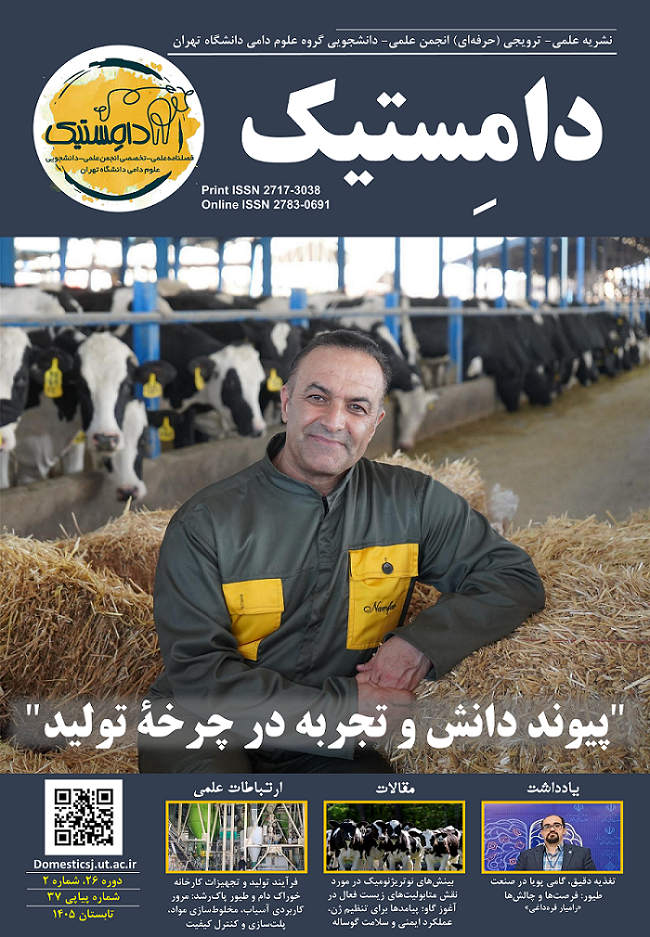
نوع مقاله : مقاله علمی- ترویجی
عنوان مقاله English
نویسنده English
The animal and poultry feed manufacturing industry is an important component of the country's livestock and food production chain. The continued operation of feed mills depends on the regular supply of raw materials, transportation, energy, financial resources, and human labor. The twelve-day war between Iran and Israel in June 2025 exposed this industry to unexpected challenges and disruptions. However, the effects of the war are not limited to the period of active hostilities and may continue to affect feed mill operations in the following months and years. Changes in transportation routes, increases in raw material procurement and transportation costs, exchange rate fluctuations, difficulties in importing feed ingredients, rising production costs, and limited financial resources are among the factors that may affect the continuity of these operations. This article examines the major impacts and challenges arising from wartime conditions on Iran's animal and poultry feed manufacturing industry. The main challenges include disruptions in raw material supply and transportation, increased procurement costs and lead times, difficulties in purchasing and production planning, greater working capital requirements, challenges in substituting certain raw materials, the potential decline in feed quality and increase in waste, and limited access to spare parts and technical services. To mitigate these challenges, several strategies are proposed, including the use of alternative suppliers, improved raw material inventory management, stronger quality control, enhanced financial and production planning, and more effective use of market and transportation information. The analysis indicates that wartime preparedness should not be limited to the immediate procurement of feed ingredients and the maintenance of production during a crisis. The consequences of war may persist beyond the cessation of hostilities and disrupt raw material supply chains for an extended period. Therefore, the twelve-day war should be regarded as a warning that highlights the need to strengthen the preparedness of animal and poultry feed mills. Enhancing supply chain resilience, improving inventory and financial management, and establishing alternative sources of raw materials can increase the capacity of these facilities to maintain production and withstand future crises.
کلیدواژهها English